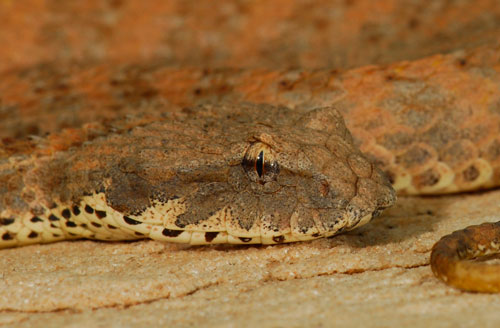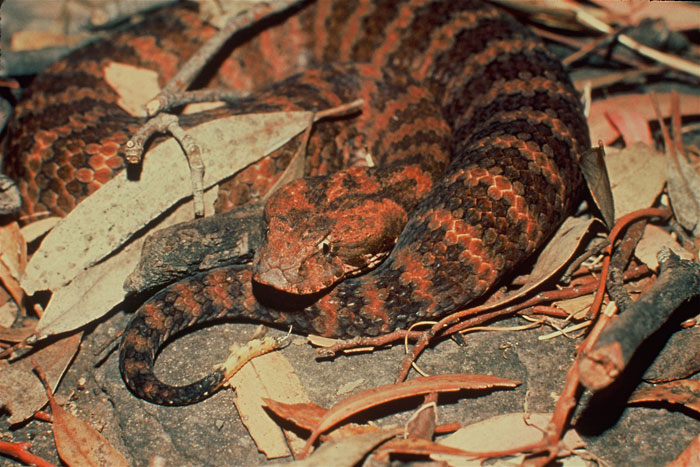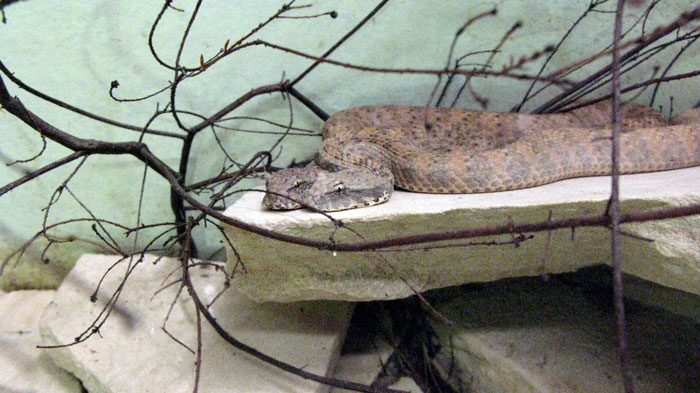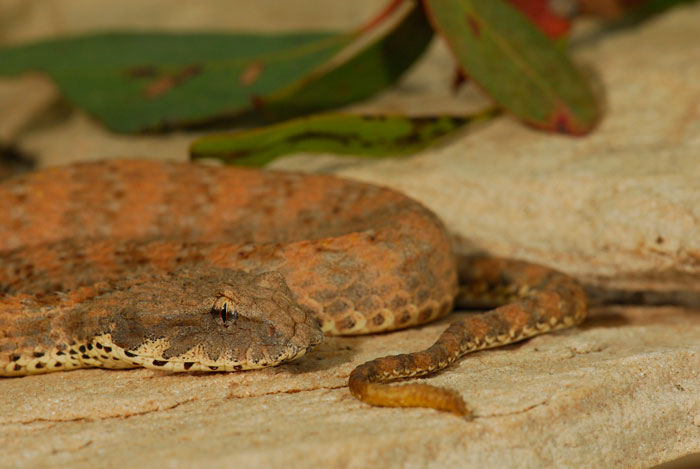
Latin Name: Acanthophis antarticus
Locailty: Eastern Australia (excluding far north and south) and southern SA and WA.
Although they are called death adders they are not a true adder. They belong to the same family as most Australian venomous snakes. This is called elapid (fixed front fanged). Adders belong to a family called viperid (hinged fangs). Because death adders are slow to retreat they usually rely on their camouflage from potential danger. Up to one metre long.
Fact: Their tail is a caudal lure, which is what they use to attract their prey. They curl up so their tail is near their face and wiggle their tail to attract their prey.