Common Wombat
| COMMON NAME: | Common Wombat |
| LATIN NAME: | Vombatus ursinus |
| MEANING: | Vombatus - "wombat"; ursinus - "bear-like" |
| FOOD: | Graze on native grasses, herbs and roots. |
| HABITAT: |
Forested areas with nearby grassy sites, scrub and heath. |
| LOCALITY: | QLD, NSW, VIC, SA, TAS |
| LENGTH: | Body: 850-1150 mm Tail: 20-30 mm |
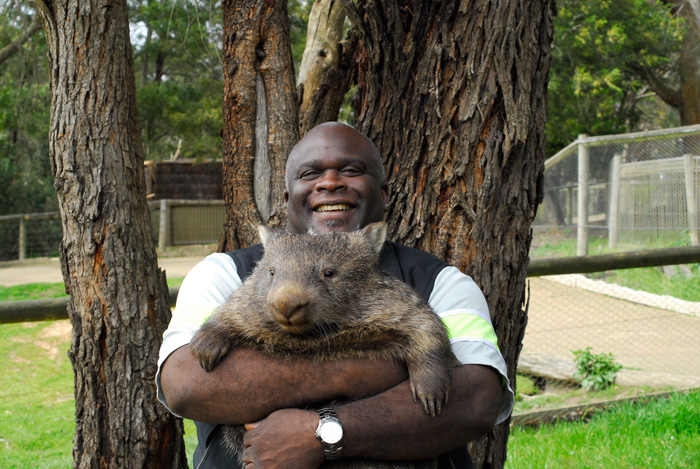
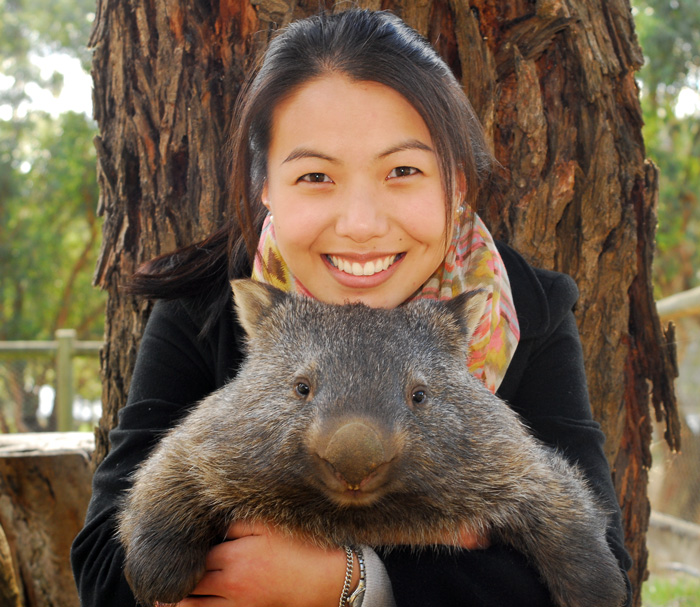
| WEIGHT: | 22-39 kg |
| BEHAVIOUR: |
Mainly nocturnal, wombats forage during the day in winter. They sleep in burrows dug in slopes above creeks and gullies up to 20 m long, often with many entrances and nesting chambers with underground connecting tunnels. Burrows are dug in a common area and some are shared. They use caves and hollows if the ground is too hard. Wombats can use more than 10 burrows, visiting 1-4 sites each night and alternating between 3 major sleeping burrows. Solitary and aggressive, they move slowly and clumsily within overlapping home ranges that have been scent-marked. |
| DEVELOPMENT: | Sexually mature at 2 years, breeding occurs any time of the year on the mainland and in winter in Tasmania. A single young is born and attaches to one of the two teats in the mother's rear-opening pouch, where it remains for about 5 months, following the mother until weaned at 17 months. Wombats live to 5 years in the wild and 20 years in captivity. |
| DESCRIPTION: |
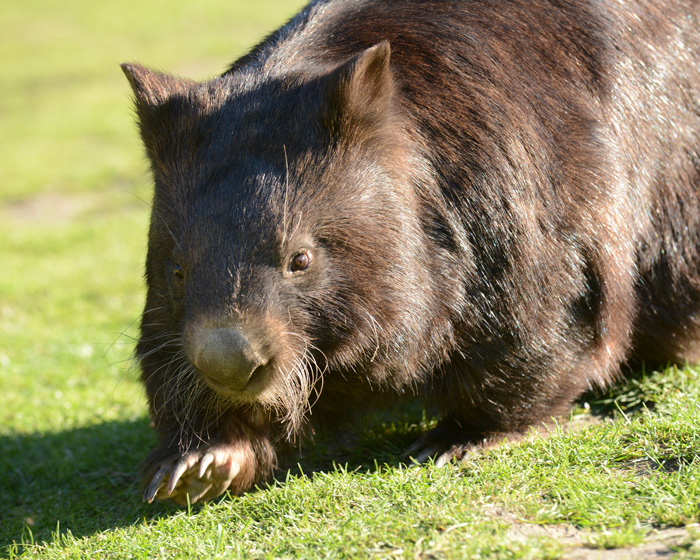
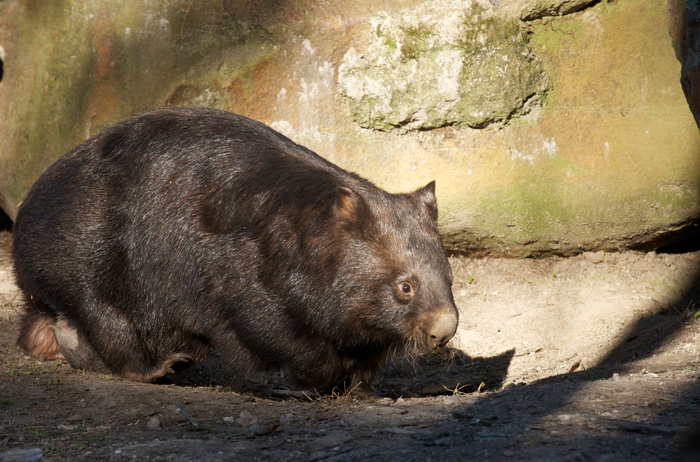
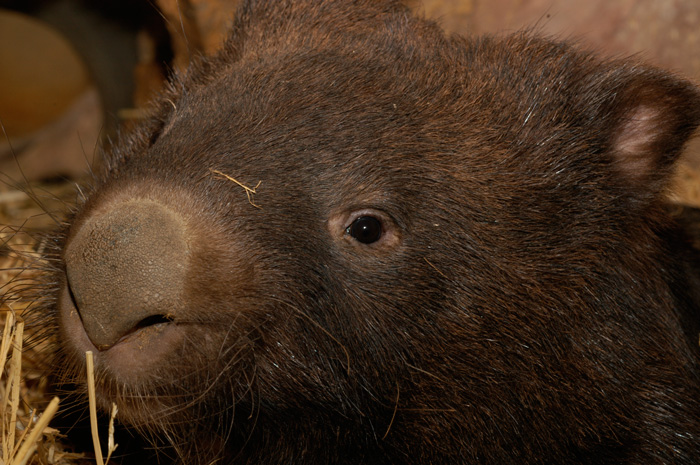
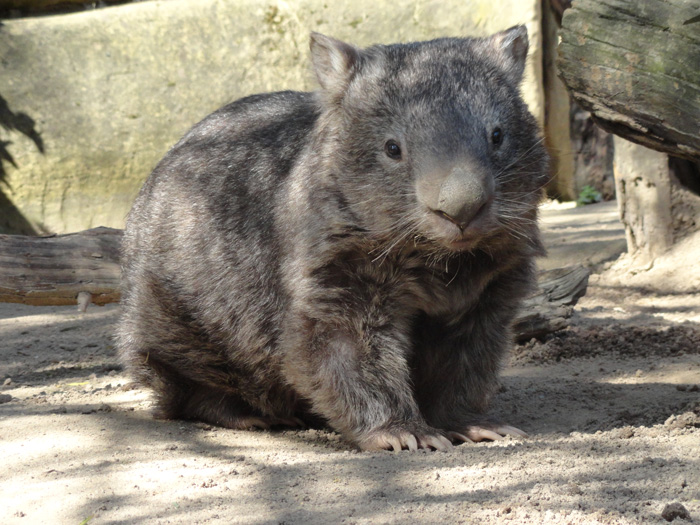
A large squat marsupial with long, coarse fur, patchy brownish-grey or dull sandy-brown above and paler below. The head is broad and large with a flattened bare nose, small eyes and small hairy ears. The tail is short and hidden by fur. The limbs are short with short toes bearing stout, flattened claws. The first toe of the hindfoot is very small; the second and third toes are joined with a double claw. |